Management Journey
Stop Managing Luxury Villas Like Oversized Apartments
19 Oct 2026 · 7 min read
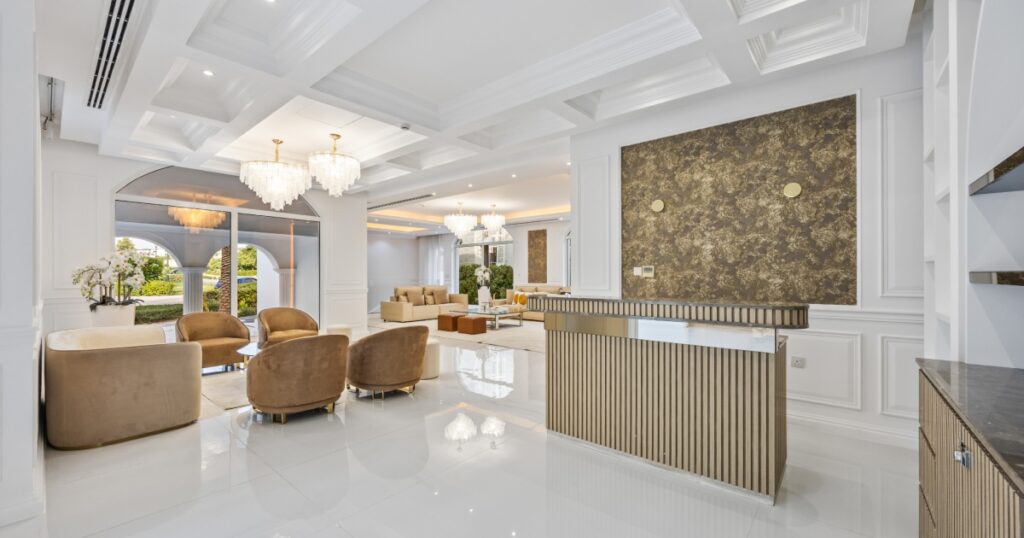
Imagine owning a six-bedroom villa on Palm Jumeirah. You’ve invested millions in a beautiful property, carefully selected the interiors and entrusted it to a holiday-home management company.
Yet your villa is being managed exactly like a studio apartment.
Same check-in process. Same cleaning checklist. Same approach to guest experience. Even the photography fails to capture what makes the property special.
The villa is spotless. The location is exceptional. The facilities are impressive.
But the property isn’t performing as expected.
The property was never the problem. The way it was being managed was.
This is one of the biggest mistakes in luxury villa management in Dubai: treating a premium property as simply a larger version of an apartment.
A luxury villa isn’t just accommodation. It’s an experience, an investment and, for many guests, the setting for a special occasion.
Managing it successfully requires a completely different mindset.
What Happens When You Manage a Luxury Villa Like an Apartment?
Think about the difference between someone booking a studio for a business trip and a family reserving a six-bedroom villa for a week.
The business traveller wants convenience, cleanliness, reliable Wi-Fi and a smooth arrival.
The family booking the villa may be celebrating a birthday, reuniting after years apart or enjoying a long-awaited holiday together.
They aren’t simply paying for six bedrooms and a swimming pool.
They’re paying for privacy, comfort, attention to detail and the freedom to enjoy their time without worrying about anything.
When a luxury villa is managed with the same systems designed for high-volume apartment rentals, the details that justify its premium price can disappear.
The pool is clean, but nobody checked whether the temperature was comfortable.
The bedrooms are ready, but nobody considered the family’s specific needs.
The check-in is efficient, but completely impersonal.
None of these details necessarily results in a formal complaint.
Instead, they may appear as a four-star review rather than five, a guest who doesn’t return or a property that gradually loses its ability to command premium rates.
And that’s where the real cost begins.
Luxury Hospitality Is About Understanding the Guest
Imagine a family arriving in Dubai to celebrate their mother’s 60th birthday.
They’ve booked a beautiful villa for five nights.
The property looks exactly like the photographs. The bedrooms are immaculate, the swimming pool is sparkling and everything works.
Technically, the management company has done its job.
But nobody asked why the family was visiting.
Now imagine a different arrival.
A handwritten birthday card is waiting on the dining table. The family’s preferred refreshments are stocked in the kitchen. A trusted private chef has been arranged for a special dinner, and the children have everything they need for a comfortable stay.
Same villa. Same five nights.
Completely different experience.
That’s the difference between providing accommodation and delivering hospitality.
Luxury isn’t always about expensive gestures. Sometimes it’s simply about paying attention.
A family travelling with young children may appreciate having a cot, highchair and suitable pool-safety arrangements organised before arrival.
A couple celebrating an anniversary may value privacy and a seamless dinner reservation.
A group arriving after a long international flight may appreciate a properly stocked refrigerator more than an elaborate welcome arrangement.
The point isn’t to offer every guest everything.
It’s to understand what matters to each guest and deliver it exceptionally well.
Of course, these experiences require reliable partners, clear responsibilities and careful coordination. A promised service that fails to arrive can damage the guest experience more than never offering it in the first place.
Why Maximum Occupancy Isn’t Always the Best Strategy for a Luxury Villa
There’s a mistake that happens frequently in holiday-home revenue management: confusing a fully booked calendar with a successful property.
Occupancy is important, but it doesn’t tell the whole story.
A villa can achieve impressive occupancy figures while generating disappointing returns because its nightly rates have been reduced too aggressively.
Consider two identical luxury villas in Dubai.
The first villa achieves 80% occupancy by regularly discounting its nightly rate to AED 2,500.
The second villa maintains a stronger premium position, achieving only 55% occupancy but commanding an average nightly rate of AED 4,000.
Over a 30-day month, the results look like this:
| Villa A | Villa B | |
|---|---|---|
| Average nightly rate | AED 2,500 | AED 4,000 |
| Occupancy | 80% | 55% |
| Nights booked | 24 | 16.5 |
| Monthly rental revenue | AED 60,000 | AED 66,000 |
These figures are illustrative and do not represent actual property performance.
The second villa generates AED 6,000 more revenue despite having significantly fewer occupied nights.
Depending on the length of each reservation, it may also experience fewer guest turnovers, lower cleaning costs and less wear and tear.
Naturally, revenue alone doesn’t determine profitability. Operating expenses, booking commissions, maintenance and other costs must also be considered.
But the example illustrates an important principle.
An empty night isn’t always a failure. Sometimes protecting the nightly rate is more profitable than chasing occupancy.
This doesn’t mean a luxury villa should aim for 55% occupancy.
If it can achieve 75% or 85% occupancy while maintaining strong rates and guest standards, that’s even better.
The objective is to maximise sustainable net revenue while protecting the property’s condition, reputation and long-term value.
A successful luxury villa pricing strategy considers seasonality, demand, booking patterns, local events and the property’s unique positioning.
It also requires the confidence to avoid unnecessary discounting simply because a few dates remain available.
A luxury villa should compete on the value of the experience it offers, not automatically become the cheapest property in its category.
Why Preventive Maintenance Matters More Than Ever
Picture this.
A family has travelled from Europe for a week-long holiday in Dubai.
It’s July. The temperature outside is approaching 45°C.
They arrive at their luxury villa, excited to spend the afternoon relaxing indoors before enjoying the swimming pool.
Then the air-conditioning fails.
Suddenly, the beautiful interiors, expensive furnishings and impressive swimming pool become irrelevant.
The family is uncomfortable. The children are frustrated. The guest is calling for immediate assistance.
What should have been a memorable holiday has become a maintenance emergency.
And the management company is now dealing with potential refunds, complaints and damage to the property’s reputation.
This is why preventive maintenance is essential in luxury villa management.
All professionally managed properties require regular maintenance, but villas often involve more complex systems and greater operational responsibilities.
Swimming pools, landscaping, irrigation, outdoor lighting, multiple air-conditioning units, appliances and smart-home technology all require attention.
A luxury villa management programme should include scheduled inspections, preventive servicing, reliable specialist contractors and detailed checks between guest stays.
The objective isn’t simply to respond quickly when something breaks.
It’s to identify potential problems before they affect the guest.
For the owner, this approach also helps protect the property’s long-term condition and reduces the risk of avoidable damage.
A well-maintained villa isn’t just more comfortable for guests. It’s a better-protected investment.
Why Luxury Villas Need a Different Booking Strategy
Not every guest searching for accommodation in Dubai is looking for the same experience.
Someone booking a studio for three nights may compare properties primarily on location, convenience and price.
A family booking a luxury villa for a special occasion is likely to consider additional factors.
Privacy. Outdoor space. Interior design. Family facilities. Service quality. Reputation.
The way a villa is presented and distributed should reflect those priorities.
Professional photography needs to communicate more than the number of bedrooms.
It should capture the atmosphere of the property, the connection between indoor and outdoor spaces and the lifestyle guests can enjoy during their stay.
Descriptions should explain what makes the villa distinctive rather than simply listing amenities.
Pricing should reflect the property’s positioning and the demand for that particular experience.
And distribution should extend beyond relying entirely on a single booking platform.
Depending on the property, opportunities may come through direct enquiries, returning guests, relocation companies, concierge partners and carefully selected online travel platforms.
Each channel reaches a different type of guest.
The objective isn’t to be everywhere.
It’s to reach the right guests, at the right price, through the channels that make commercial sense.
The Real Difference Between Managing a Property and Delivering Hospitality
A luxury villa can have exceptional architecture, beautiful interiors and one of the most desirable addresses in Dubai.
But none of those things guarantees an exceptional guest experience or strong financial performance.
That depends on what happens after the booking is confirmed.
How the guest is welcomed.
How the property is maintained.
How unexpected situations are handled.
How pricing decisions are made.
And how consistently the experience lives up to the expectations created by the photographs.
The most successful luxury villas aren’t necessarily the ones with the highest occupancy or the most expensive interiors.
They’re the ones where the property, the service and the management strategy work together.
Because a luxury villa is more than a property with additional bedrooms.
It’s someone’s investment, someone’s holiday and sometimes the setting for a memory that will last a lifetime.
Managing it properly requires more than filling a calendar.
It requires understanding what makes the property valuable in the first place.
Luxury isn’t measured by how many bedrooms a villa has. It’s measured by the experience it delivers.